
As a stationery nut, a major joy of collecting all of these pens is swatching them. Swatching pens is oh so important before use! There’s a lot of information that you would want to know about your pen before you sit down and use it for anything, especially if it is something important.
I love to give attention to pens, and when I write about them, I give them what I call a “spotlight”. Spotlighting is when I discuss the pen, its form factor, its price, and qualities. For me, Pens have three main qualities that I look for when I am using them.
Outside of basic information like the pen name and point size, I look for Viscosity, Vibrancy, and Highlighter resistance. Every time I spotlight a pen I keep these things in mind. Here is a summary of those three qualities.
Viscosity
Viscosity is the ability for a liquid to resist flow. With regards to pens, viscosity determines how easily your pen ink flows when it is coming out of the pen tip. Low-viscosity pens have little resistance, and the ink flows out fast. High viscosity pens have a thicker ink, which is more resistant to flowing. There are advantages and disadvantages to both.
Rollerballs and gel pens have a low ink viscosity, meaning that they are fairly wet pens and fairly runny. They tend to take more time to dry than a traditional ballpoint, since their ink is made of a higher percentage of water than high viscosity pens. Rollerballs, the lowest viscosity pens, tend to bleed into paper, as their watery inks are absorbed quickly.
When we think of high viscosity pens, we tend to think of ballpoints like the classic Bic. When viscosity in the pen is high, that means that the ink is thicker, typically oil based. The good thing about these pens is that the ink dries incredibly fast, and they tend to be the most resistant to smudging.
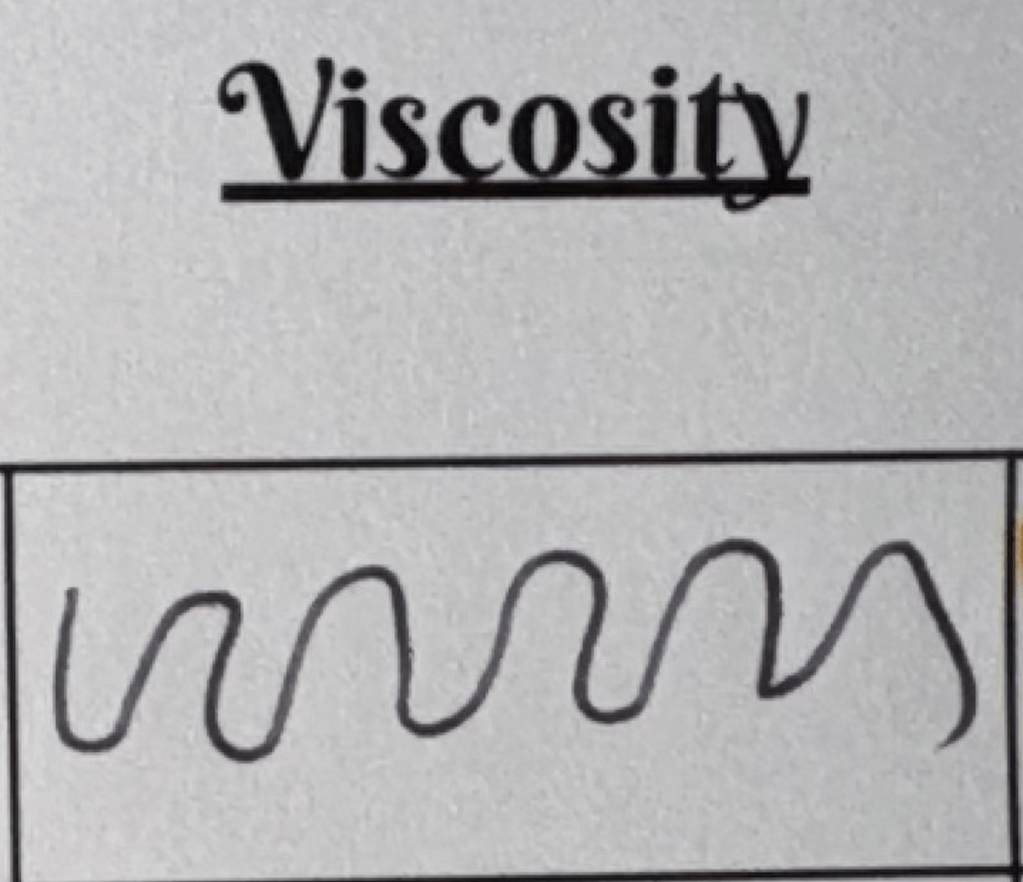
When testing viscosity, I draw a set of lines going up and down in a swatch box. This tells me how smoothly the ink is flowing, how wet it is, and if there is any bleeding into the paper. I will also be able to see if any feathering occurs, though this usually only happens with rollerballs at a tip size of 0.7mm or higher.
Vibrancy
When I use the word “Vibrant” I refer to color intensity. As I swatch pens, I compare how intense the color is on the paper. This is a particularly important characteristic, since pens are made to be read.
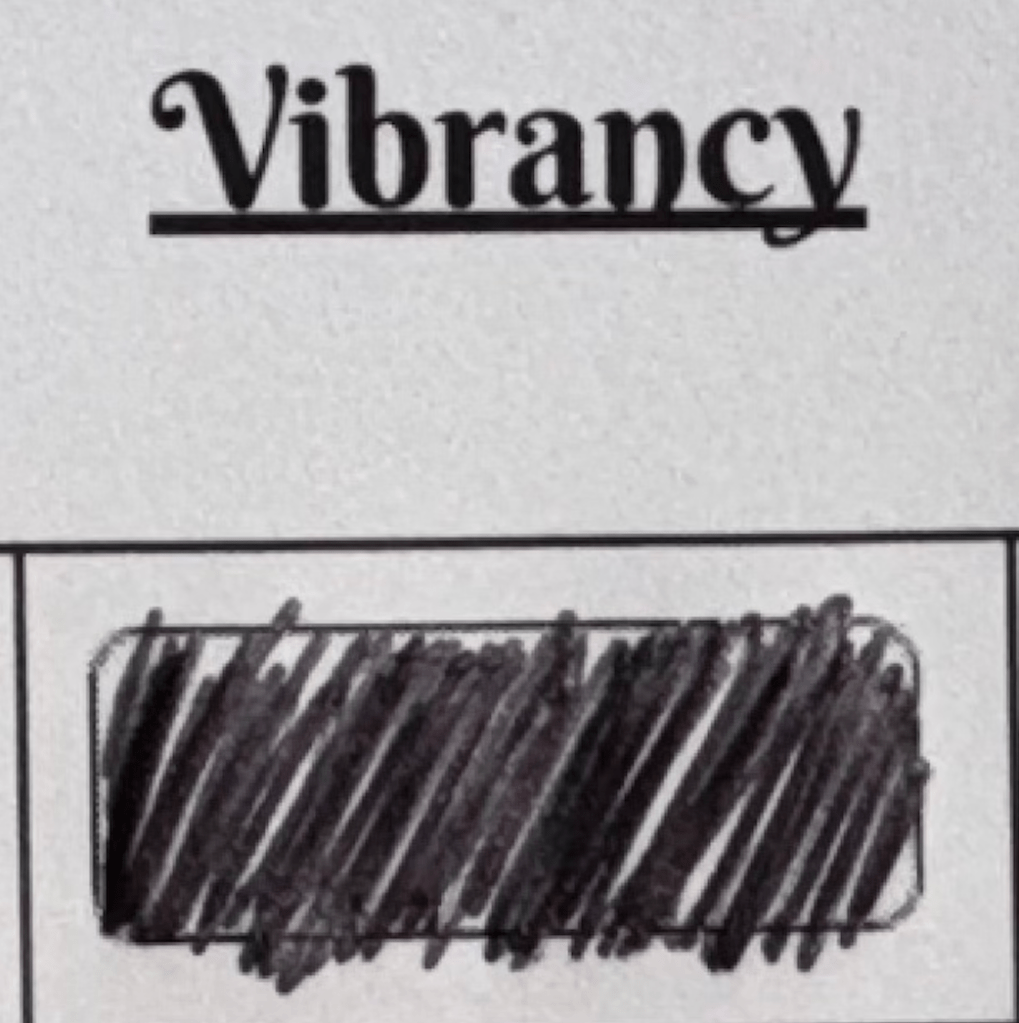
To test vibrancy I swatch the pen back and forth, filling up a rectangle with the ink from the pen. From there, I check to see how intense the color is on the paper. Please note that this quality does not always photograph well, but I also provide a description.
In general, ballpoint pens tend to have the lowest vibrancy (unless they use hybrid technology), while gel pens tend to have the highest. Rollerballs are typically slightly less vibrant than gels.
Highlighter Resistance
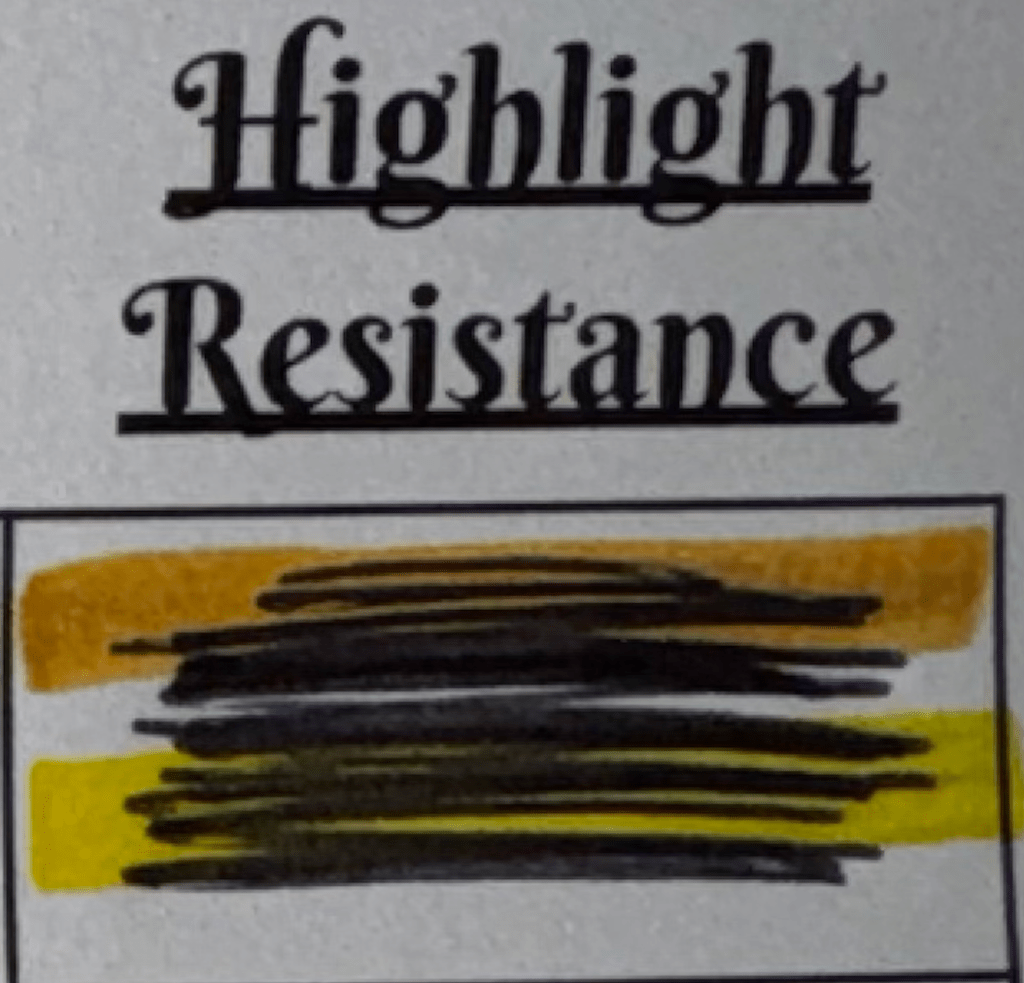
The last major thing I test for is highlighter resistance. This is of particular importance to students, but also can indicate water resistance. The way this is tested is that I run the pen across the paper in a zigzag formation and wait at least 15 seconds. From there, I use two different highlighters, a generic yellow one on the top, and a Zebra Mildliner on the bottom.
I judge Highlighter Resistance by checking to see how much the ink bleeds and gets pulled when the highlighter passes it. If the ink doesn’t move at all, then the pen has High Resistance to Highlighters. If the ink smudge and pulls a lot, then the pen has Low Highlighter Resistance.
As most highlighters are water-based, this also serves as a water resistance test. If a pen ink has Low Highlighter Resistance, it will also have Low Water Resistance.
I use two different highlighters at all times. The first one is a generic highlighter from the dollar store. It is comparable to a highlighter from Bic. The second is a Zebra Mildliner. The reason I use two is that Mildliners are in a class of their own, and will smudge nearly every non-oil based pen. The generic highlighter will be more reminiscent of what the average person might use.
If you find that your favorite pen smudges with all liquid highlighters, consider a gel highlighter alternative. These are also known as “bible highlighters”, and have a waxier consistency designed to avoid passthrough to the other size of the paper, as well as avoid smudging.
Swatch Charts
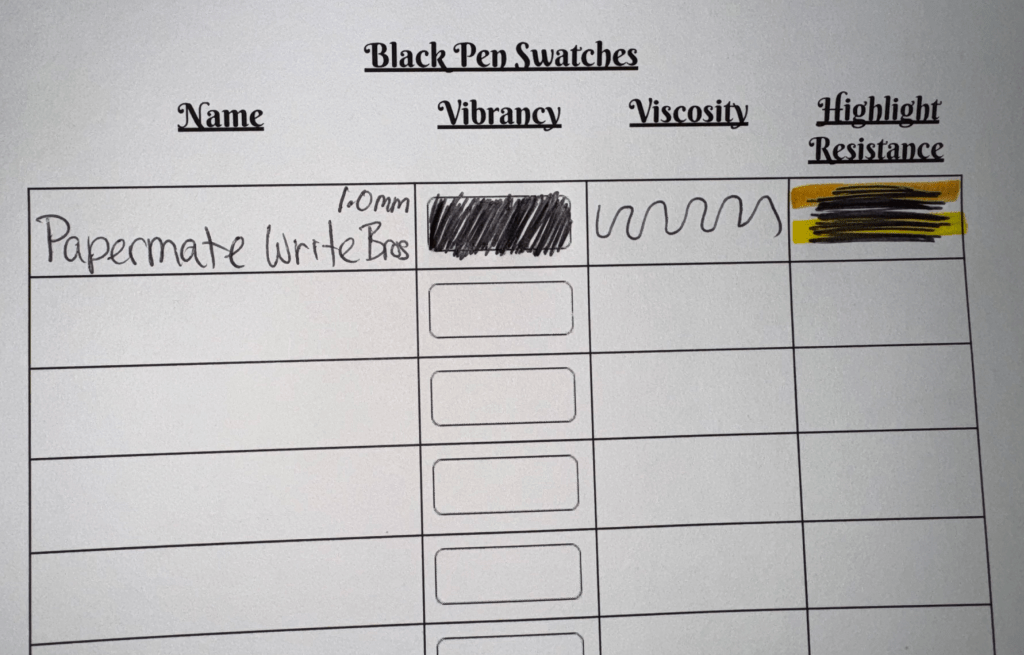
Every time I swatch a new pen, it goes onto a swatch chart. This swatch chart groups together pen families, as well as makes it easy to see the good and bad in a pen range.
Here is an example of all of this information laid out on a swatch row.
I hope you all enjoy your trip on this pen journey with me. 🙂
Keep up the Pen-ergy!
-StationaryGuy
 StationaryGuy
Leave a comment